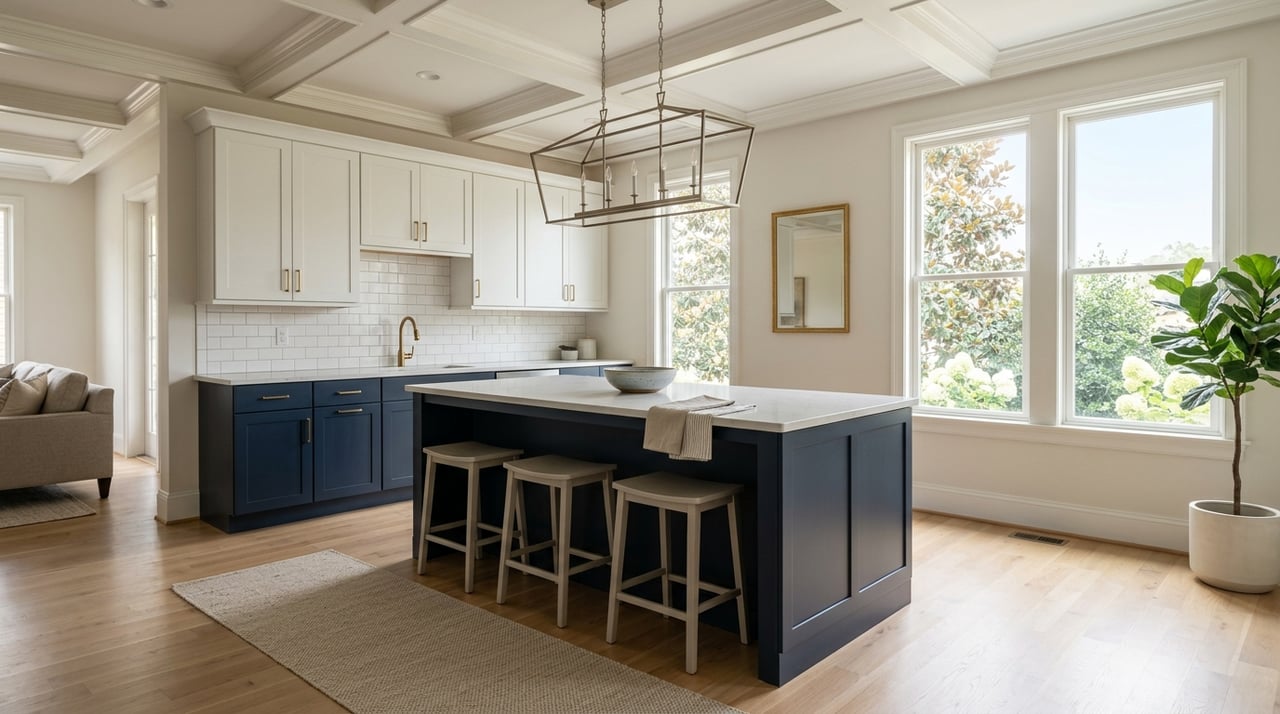
Suffolk VA New Construction vs Resale: How to Decide
June 11, 2026
June 11, 2026
Buying in Suffolk right now can feel like you have two very different roads in front of you. One leads to shiny new builds, builder contracts, and planned communities. The other leads to existing homes, faster closings, and a chance to see exactly what you are getting before you commit. If you are weighing new construction versus resale in Suffolk, this guide will help you compare cost, timing, maintenance, and monthly payment so you can make a decision that fits your goals. Let’s dive in.
Suffolk is not a one-size-fits-all market. Recent market data shows a balanced environment, with 593 homes for sale, a median of 34 days on market, and homes selling at 100% of list price in March 2026. That gives you options, but it also means you need to compare homes carefully rather than assuming one path is automatically better.
Price points vary a lot across the city. Recent snapshots show medians around $350,000 in zip codes 23434 and 23438, about $475,000 in 23435, and roughly $557,500 in 23432. In simple terms, your answer may depend just as much on where in Suffolk you want to live as whether the home is brand new or resale.
Suffolk’s long-term growth plan also shapes what buyers see on the ground. The city is directing development into specific growth areas tied to infrastructure and services. That is one reason many new homes are concentrated in certain corridors and planned communities instead of being spread evenly across the city.
New construction can be appealing if you want a home with newer materials, modern layouts, and fewer repair issues early on. In late spring 2026, Suffolk had 341 new-home results on Zillow, with examples starting around $299,990 and reaching $729,900, plus some buildable plans above $900,000. Many of these were in 23434 and 23435.
That range matters because it shows new construction is not always out of reach. Some buyers assume a new home automatically means a luxury budget, but Suffolk has entry-level and mid-market options too. Still, the advertised price does not always tell the full story.
A new home can offer a more predictable start. Systems, appliances, and finishes are new, which may reduce repair needs in the first years of ownership. That can be especially attractive if you are relocating, juggling a sale and purchase, or just want fewer surprise expenses after move-in.
Efficiency is another plus. ENERGY STAR certified homes are designed to exceed minimum energy-code requirements by at least 10%, and WaterSense labeled homes are 30% more water-efficient than typical new construction. According to EPA guidance, that can save a family 50,000 gallons of water or more and about $700 per year in water and energy bills.
Builder warranties may also add peace of mind. HUD guidance for approved new houses references a one-year builder warranty for defects in labor and materials, and some homes may also have a ten-year insured warranty plan. The key is to review the written warranty carefully and understand what is and is not covered.
The list price may not be the finished price. Some build-on-your-lot listings in Suffolk specifically state that the quoted plan price does not include the lot. That means you may need to budget separately for the home, the land, upgrades, and other costs before you compare that number to a resale home.
The timeline is also more involved. Suffolk requires both zoning and building permits before construction begins, and the city’s inspection process includes multiple stages such as foundation, framing, insulation, utility checks, final trade inspections, final building inspection, and energy and document reviews before a Certificate of Occupancy is issued. In practice, that usually means a longer and more process-heavy path than buying an existing home.
You should also plan for builder-specific contract terms. A builder may ask for an upfront deposit, often called earnest money, and some builders may encourage buyers to use an affiliated lender. You are not required to use that lender, so it is smart to shop financing and compare the total loan cost before deciding.
Many new homes in Suffolk are located in planned communities, and HOA dues are common. Those dues are usually paid separately from your mortgage. Current examples in Suffolk show a real spread, from about $55 per month in some neighborhoods to $190 per month and even $244 per month in others.
That does not mean an HOA is good or bad by itself. It simply means your monthly payment may be higher than the base mortgage number you first focused on. When you compare new construction with resale, make sure those dues are part of your budget.
A resale home can be the better fit if timing, certainty, and neighborhood variety matter most to you. In many cases, you can tour the exact home, see the lot, study the surroundings, and move toward closing on a more typical timeline. That can make resale especially appealing if you need to coordinate a move around work, family, or a home sale.
Resale also gives you access to more parts of Suffolk. Since new construction tends to cluster in designated growth areas, existing homes may give you more flexibility in location, price point, and lot style. If your search is driven by commute patterns, established streets, or a certain part of the city, resale may open more options.
The biggest advantage is clarity. You are not buying from renderings, samples, or a model home. You can evaluate the actual property condition, room flow, yard, and street setting before you make an offer.
The timeline is often easier to manage too. If you need to line up the sale of your current home with your next purchase, a resale transaction can offer more certainty than a build that still has construction milestones ahead. For relocations and move-up buyers, that can make a big difference.
There may also be room to negotiate around inspections, repairs, or credits. CFPB guidance notes that buyers often make offers contingent on financing and a satisfactory inspection. If serious issues come up, buyers can often walk away without penalty, and in some cases the seller may agree to repairs or concessions.
The tradeoff is maintenance. Homeowners are responsible for repairs, from small items like plumbing issues to larger expenses such as roof replacement. A lower purchase price can be attractive at first, but older systems or deferred upkeep may create costs later.
That is why a careful home inspection matters. A resale home may offer faster occupancy, but you still need to understand the age and condition of major components. Budgeting for maintenance, utilities, repairs, and an emergency cushion is part of a realistic ownership plan.
Resale prices in Suffolk also vary widely. Depending on the area, a resale home may compete directly with entry-level new construction or sit in a much higher price bracket. It is not enough to compare “new” versus “old.” You need to compare specific homes in the same budget lane.
This is where many buyers get tripped up. The smartest comparison is not just the purchase price. It is the full monthly carrying cost and the cash you need upfront.
For any Suffolk home, your budget should include:
Closing costs typically run about 2% to 5% of the purchase price. With new construction, you may also face builder deposits, lot premiums, and upgrade costs. With resale, the bigger financial pressure may come later through repairs, updates, or replacement reserves.
Property taxes are a good example of how a higher price can change your monthly payment. Suffolk’s current city real estate tax rate is $1.07 per $100 of assessed value. That puts a $400,000 home at roughly $4,280 per year in city real estate taxes, while a $500,000 home is about $5,350 per year, before any district-specific taxes or exemptions.
A newer home with fewer immediate repairs may still cost more each month if the purchase price and HOA dues are higher. On the other hand, a resale home with a lower sticker price may need enough work that the savings disappear over time. That is why the best comparison is a side-by-side review of monthly payment, upfront cash, and likely maintenance over the first few years.
If you are stuck, focus on four questions.
If you need a quicker, more predictable closing, resale often has the edge. If you can wait through permitting, inspections, and construction milestones, new construction may still be a strong option.
With new construction, some decisions happen before the home is complete. With resale, you can usually inspect the exact home and evaluate condition upfront. Neither is wrong, but they require different comfort levels.
New homes may reduce early maintenance, but the total monthly payment can be higher once you factor in taxes, dues, and upgrades. Resale may offer a lower purchase price in some areas, but you need to be ready for repairs and updates.
Because Suffolk has a wide price spread and focused growth areas, location should be part of the decision from the start. In some parts of the city, new construction may be plentiful. In others, resale may give you more choices and better value.
In a balanced market like Suffolk’s, you do not have to force the decision too early. Homes are selling, but buyers still have room to compare options thoughtfully. That makes this a great time to measure new construction and resale against your real priorities instead of chasing whichever category feels more exciting.
If you want lower early maintenance, newer efficiency, and a more modern community setup, new construction may fit. If you want faster occupancy, more location options, and the ability to inspect and negotiate on an existing property, resale may be the better path. The right answer is the one that fits your timing, budget, and comfort level.
Whether you are a first-time buyer, moving up, or relocating to Hampton Roads, it helps to have a local guide who can break down the tradeoffs clearly and help you compare homes apples to apples. If you want practical advice tailored to your move, reach out to Xavier Bryan for a buyer consult and a smart game plan.
Stay up to date on the latest real estate trends.



I'm an expert real estate agent with eXp Realty in Newport News, VA and the nearby area, providing home-buyers and sellers with professional, responsive and attentive real estate services. Want an agent who'll really listen to what you want in a home? Need an agent who knows how to effectively market your home so it sells? Give me a call! I'm eager to help and would love to talk to you.